Don't miss our holiday offer - up to 50% OFF!
Landmark Judgments Every Law Student Must Know

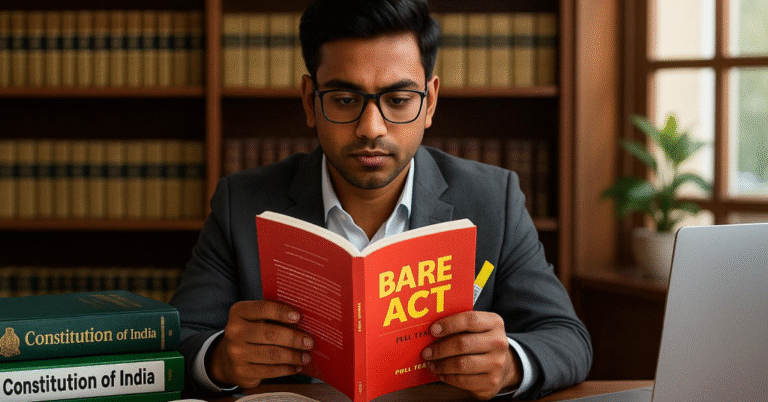
The study of law extends far beyond statutes and bare acts. Judicial decisions play a crucial role in interpreting legislation, protecting constitutional values, and shaping the legal framework of the nation. For every law student, understanding landmark judgments is essential because these cases form the foundation of constitutional law, criminal law, administrative law, and human rights jurisprudence.
Whether you’re preparing for university examinations, judiciary services, CLAT PG, moot courts, internships, or legal practice, familiarity with landmark judgments can significantly strengthen your legal understanding and analytical skills.
In this comprehensive guide, we explore some of the most influential judgments delivered by the Supreme Court of India that every law student should know.
Table of Contents
Why Landmark Judgments Matter for Law Students
Before diving into specific cases, it is important to understand why landmark judgments hold such significance.
Landmark judgments:
- Interpret constitutional provisions
- Define the scope of fundamental rights
- Establish legal precedents
- Influence future legislation
- Shape public policy
- Protect democratic principles
- Provide practical application of legal theories
For law students, studying these cases helps bridge the gap between legal concepts and real-world implementation.
1. Kesavananda Bharati v. State of Kerala (1973)
Background
The Parliament had enacted several constitutional amendments affecting property rights and judicial review. The petitioner challenged these amendments, arguing that Parliament could not alter the basic identity of the Constitution.
Key Legal Issue
Can Parliament amend any part of the Constitution, including Fundamental Rights?
Supreme Court Verdict
The Supreme Court held that Parliament possesses wide powers to amend the Constitution under Article 368. However, it cannot alter the Basic Structure of the Constitution.
Birth of the Basic Structure Doctrine
According to the judgment, Parliament cannot destroy essential features such as:
- Rule of law
- Judicial review
- Federalism
- Separation of powers
- Democracy
- Secularism
- Constitutional supremacy
Why This Case Matters
This is arguably the most important constitutional judgment in Indian history. It prevents any government from fundamentally changing the democratic nature of the Constitution.
Exam Tip
The Basic Structure Doctrine is one of the most frequently asked topics in constitutional law examinations and judiciary interviews.
2. Maneka Gandhi v. Union of India (1978)
Background
The government impounded Maneka Gandhi’s passport without providing adequate reasons. She challenged the action as violating her fundamental rights.
Key Legal Question
What is the scope of “personal liberty” under Article 21?
Supreme Court Verdict
The Court held that any law affecting life and personal liberty must be:
- Just
- Fair
- Reasonable
- Non-arbitrary
Significance
The judgment expanded the interpretation of Article 21 and transformed it into one of the most powerful constitutional protections available to citizens.
Many rights now recognized under Article 21 emerged from this broader interpretation, including:
- Right to privacy
- Right to travel
- Right to legal aid
- Right to clean environment
- Right to education
Why Law Students Must Study It
This case revolutionized Indian constitutional jurisprudence and remains a cornerstone of fundamental rights law.
3. A.K. Gopalan v. State of Madras (1950)
Background
A communist leader challenged his preventive detention under the Preventive Detention Act.
Importance
Although later limited by the Maneka Gandhi judgment, this case is essential because it represents the early judicial interpretation of Article 21.
Learning Outcome
Law students should understand:
- The evolution of due process jurisprudence
- Judicial interpretation over time
- How constitutional principles develop through case law
4. Golaknath v. State of Punjab (1967)
Background
The petitioners challenged constitutional amendments affecting property rights.
Supreme Court Verdict
The Court ruled that Parliament could not amend Fundamental Rights.
Long-Term Impact
Although later modified by Kesavananda Bharati, this judgment initiated one of India’s most significant constitutional debates regarding the limits of parliamentary power.
Why It Matters
Understanding Golaknath helps students appreciate the evolution of constitutional amendment jurisprudence in India.
5. Vishaka v. State of Rajasthan (1997)
Background
The brutal assault of social worker Bhanwari Devi exposed the absence of legal protection against workplace sexual harassment.
Key Issue
How should workplace sexual harassment be addressed when no specific legislation exists?
Supreme Court Verdict
The Court framed the famous Vishaka Guidelines, establishing mandatory safeguards against workplace harassment.
Impact
The judgment eventually led to the enactment of the Sexual Harassment of Women at Workplace (Prevention, Prohibition and Redressal) Act, 2013.
Why Students Should Know This Case
It demonstrates:
- Judicial activism
- Protection of women’s rights
- Use of international conventions in constitutional interpretation
6. Justice K.S. Puttaswamy v. Union of India (2017)
Background
The Aadhaar project raised concerns regarding privacy and surveillance.
Constitutional Question
Is privacy a fundamental right under the Constitution?
Supreme Court Verdict
A nine-judge bench unanimously held that privacy is a fundamental right protected under Article 21.
Key Principles Established
Privacy includes:
- Informational privacy
- Bodily autonomy
- Personal choices
- Dignity
- Data protection
Significance in the Digital Era
The judgment has become increasingly important due to:
- Social media
- Artificial intelligence
- Data collection
- Digital surveillance
- Cybersecurity concerns
Why Law Students Must Study It
This case forms the foundation of modern privacy and technology law in India.
7. Indira Nehru Gandhi v. Raj Narain (1975)
Background
The election of Prime Minister Indira Gandhi was challenged in court.
Legal Issue
Could Parliament remove judicial review concerning election disputes?
Supreme Court Verdict
The Court invalidated provisions attempting to exclude judicial review.
Significance
The judgment reinforced:
- Rule of law
- Democratic accountability
- Judicial independence
Examination Relevance
Frequently cited in discussions relating to constitutional governance and separation of powers.
8. Minerva Mills v. Union of India (1980)
Background
The constitutional validity of certain provisions of the 42nd Amendment was challenged.
Supreme Court Decision
The Court held that limited amending power itself forms part of the Constitution’s Basic Structure.
Key Takeaway
A balance must exist between:
- Fundamental Rights
- Directive Principles of State Policy
Importance
This judgment strengthened constitutional safeguards against excessive governmental power.
9. Olga Tellis v. Bombay Municipal Corporation (1985)
Background
Pavement dwellers challenged eviction actions taken by municipal authorities.
Supreme Court Ruling
The Court held that the right to livelihood forms an integral part of the right to life under Article 21.
Significance
The judgment expanded socio-economic protections available to citizens.
Why It Matters
This case illustrates how constitutional rights can be interpreted to address social realities.
10. Navtej Singh Johar v. Union of India (2018)
Background
The constitutional validity of Section 377 of the Indian Penal Code was challenged.
Supreme Court Verdict
The Court decriminalized consensual same-sex relations between adults.
Constitutional Principles Applied
- Equality
- Dignity
- Privacy
- Individual autonomy
Significance
This judgment marked a major advancement in LGBTQ+ rights and constitutional freedoms.
Why Law Students Should Study It
It demonstrates constitutional morality and progressive interpretation of rights.
11. Shayara Bano v. Union of India (2017)
Background
The practice of instant triple talaq was challenged.
Supreme Court Verdict
The Court declared instant triple talaq unconstitutional.
Importance
The judgment strengthened:
- Gender justice
- Women’s rights
- Constitutional equality
Academic Relevance
Frequently discussed in constitutional law and personal law studies.
12. ADM Jabalpur v. Shivkant Shukla (1976)
Background
During the Emergency, citizens challenged restrictions on habeas corpus petitions.
Verdict
The majority held that fundamental rights could be suspended during Emergency.
Historical Significance
The judgment is widely criticized and later effectively overruled through subsequent constitutional developments.
Why Students Must Know It
Understanding judicial mistakes is as important as understanding judicial successes.
13. S.R. Bommai v. Union of India (1994)
Background
The misuse of Article 356 led to constitutional challenges regarding President’s Rule.
Supreme Court Decision
The Court restricted arbitrary dismissal of state governments.
Importance
The judgment strengthened:
- Federalism
- Democratic governance
- Judicial review
Why It Remains Relevant
It continues to govern Centre-State relations in India.
14. NALSA v. Union of India (2014)
Background
The rights of transgender persons were brought before the Court.
Supreme Court Verdict
The Court recognized transgender individuals as the third gender.
Constitutional Impact
The judgment affirmed:
- Equality
- Dignity
- Freedom of expression
- Non-discrimination
Significance
A milestone judgment in human rights jurisprudence.
15. MC Mehta Cases: Foundation of Environmental Jurisprudence
Environmental lawyer M.C. Mehta was involved in several landmark cases that transformed environmental law in India.
Important Principles Developed
Polluter Pays Principle
Polluters must compensate for environmental damage.
Absolute Liability Principle
Industries engaged in hazardous activities are absolutely liable for harm caused.
Sustainable Development
Economic development must not compromise environmental protection.
Importance for Students
Environmental law questions frequently appear in judiciary examinations and university assessments.
Common Topics Examined Through Landmark Judgments
When studying these cases, focus on:
Fundamental Rights
- Equality
- Freedom
- Privacy
- Life and liberty
Constitutional Governance
- Judicial review
- Separation of powers
- Federalism
- Democracy
Social Justice
- Gender equality
- LGBTQ+ rights
- Minority rights
- Labour rights
Administrative Law
- Natural justice
- Fair procedure
- Government accountability
How to Study Landmark Judgments Effectively
Instead of memorizing entire judgments, use the following framework:
1. Facts of the Case
Understand what happened.
2. Legal Issues
Identify constitutional or statutory questions.
3. Arguments
Know the main contentions of both sides.
4. Judgment
Understand the final ruling.
5. Ratio Decidendi
Focus on the legal principle established.
6. Impact
Analyze how the judgment changed Indian law.
Creating case notes using this structure improves retention and exam performance.
Recommended Books for Studying Landmark Judgments
To gain a deeper understanding of constitutional and judicial developments, law students should consider:
- Constitutional Law by M.P. Jain
- Constitutional Law of India by V.N. Shukla
- Introduction to the Constitution of India by D.D. Basu
- Landmark Judgments That Changed India by Asok Kumar Ganguly
- Bare Acts of the Constitution of India
- Supreme Court Case Digests
These books provide detailed commentary and judicial analysis useful for exams and professional development.
Conclusion
Landmark judgments are the backbone of legal education. They reveal how constitutional values are interpreted, how rights are protected, and how legal principles evolve with society. From Kesavananda Bharati and Maneka Gandhi to Puttaswamy and Navtej Johar, these decisions continue to influence legislation, governance, and public life across India.
For every aspiring lawyer, judge, legal researcher, or law student, mastering these landmark cases is not merely an academic requirement—it is essential for understanding the living Constitution of India and the development of modern jurisprudence.
The more deeply you study these judgments, the better equipped you will be to analyze legal issues, argue cases, and contribute meaningfully to the legal profession.